- Richard Taylor (1919 – 2003)
Tuesday, December 09, 2025
Banyans & Balls (or "Sufficient Reason")
Thursday, October 02, 2025
Musical Dream
Tuesday, August 26, 2025
Dimensions of Reality
- Brassaï (1899 - 1984)
Sunday, November 17, 2024
Reflecting Surrealities
- André Breton (1896 - 1966)
Manifestoes of Surrealism
Wednesday, October 25, 2023
Capturing Surrealities - #2
"Far away there in the sunshine
are my highest aspirations.
I may not reach them, but I can
look up and see their beauty,
believe in them, and try
to follow where they lead."
Sunday, September 10, 2023
Iceland's Immeasurable Boundlessness
- Dino Buzzati (1906 - 1972)
The Tartar Steppe
The passage above is taken from a novel of one of my favorite authors. Buzzati was trained as a journalist, but channeled his creative energies into creating a magical-realist-like (Kafkaesque, even Borgesian) surrealist world of fantasy just on the cusp of seeming "real." The Tartar Steppe is arguably his best known work. The "hero" of the story, Giovanni Drogo, is stationed at a fort in the desert that overlooks the vast Tartar steppe and told to await an invasion; one which, as we learn over the course of the novel, never actually comes. Among other things (e.g., a scathing rebuke of military life) it is a Camus-like Sisyphisian meditation on time, life, the specter of lost opportunities, and the perpetual - unquenchable - thirst for fulfilment. But, while all of these elements are fascinating on their own (and should prompt anyone with a penchant for Kafka and Borges who has not yet experienced Buzatti's writing to become acquainted with his work), I was reminded of another element of this allegorical tale while driving with my family around Iceland. Namely, its subtle depiction of the immeasurable boundlessness - the infinity - of space and and time.
Iceland is a curiously dynamic blend of physical, aesthetic, and spiritual contrasts that never do more than only hint at some unfathomable underlying "reality." Iceland's vast stretches of land and sea can be used as backdrops to Drogo's endless wait for something to happen. Seemingly infinite blocks of solidified magma and melting glaciers are omnipresent on the horizon; approachable, in principle (by inquisitive souls willing to risk flat tires or broken axles - or both - while traversing the unpaved roads trying to get to them) but perpetually just-out-of-reach. Measures of time and distance both loose conventional - indeed, any - meaning. Just as the Apollo astronauts had difficulty judging how far rocks and mountains were from them on the moon (in the moon's case, because of the lack of an atmosphere), my family and I often struggled to estimate how "near" or "far" anything was; or how "long" or "short" a time it would take to get somewhere. In our case, this was due not to a lack of an atmosphere (the ever-churning transitions from clear skies to moody clouds to thick unrelenting globs of wind and rain to clear skies again were constant reminders of Iceland's dramatic weather; unlike in Buzatti's novel - in Iceland things emphatically do happen!), but simply to how alien Iceland's landscape is compared to our calibrated norms. Everything In Iceland seems to be simultaneously so close as give the illusion of intimacy, and yet so remotely far, so incomprehensibly and immeasurably distant, as to be unapproachable, at least within a single lifetime (or, at least, during a single trip 😊
Monday, October 31, 2022
Di-Eclectic Eyes
"My mind is an attic full of crazy dreams that never quit or disappoint me, and I have been blessed with these eyes to see things differently and have people see me in a different way.
but the second gravedigger,
not Lear but the fool."
Monday, May 11, 2020
Being and Thinking
Wednesday, August 10, 2016
Skye's Evanescent Moods
"The light of memory, or rather the light that memory lends to things, is the palest light of all. I am not quite sure whether I am dreaming or remembering, whether I have lived my life or dreamed it. Just as dreams do, memory makes me profoundly aware of the unreality, the evanescence of the world, a fleeting image in the moving water."
On the other hand, I may be over-complicating matters, as is my penchant to do, for as Lao Tzu reminds us, "The Way to do is to be." Ultimately, whatever distinctions may or may not exist between "doing A" and "doing B" are mine, and mine alone. I can experience Skye, I can capture (aspects of) Skye with my camera, I can be on Skye, but these seemingly disparate acts are all just "me being me" on Skye. Skye itself remains blissfully evanescent and eternally ineffable. And that is why I can't wait to go back to "me being me" on Skye.
Sunday, May 27, 2012
"Synesthetic Landscapes" Portfolio Book Published
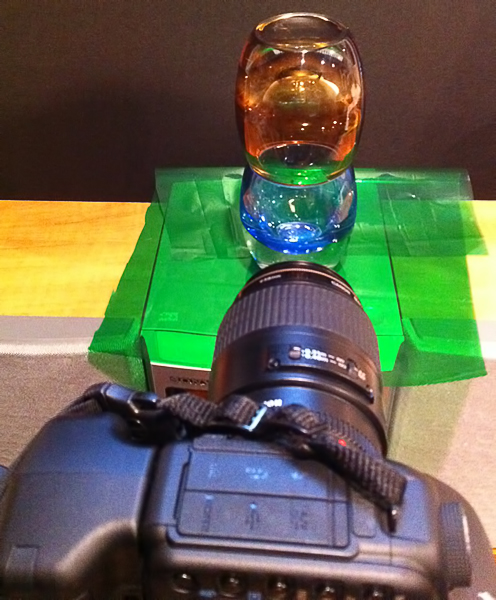
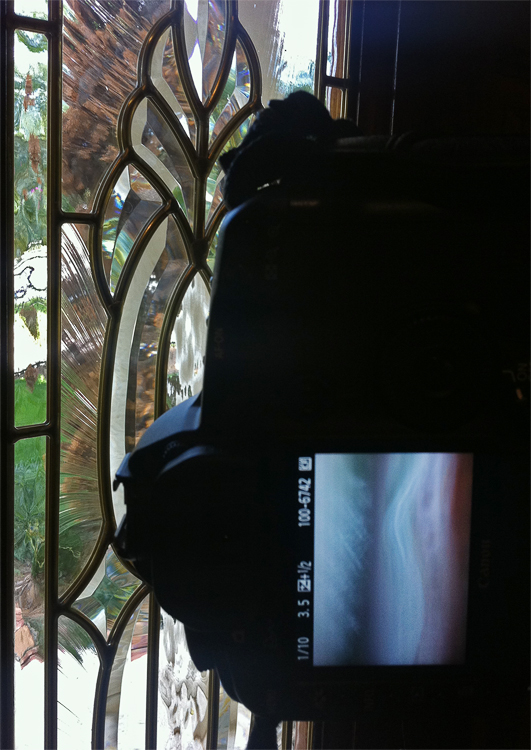
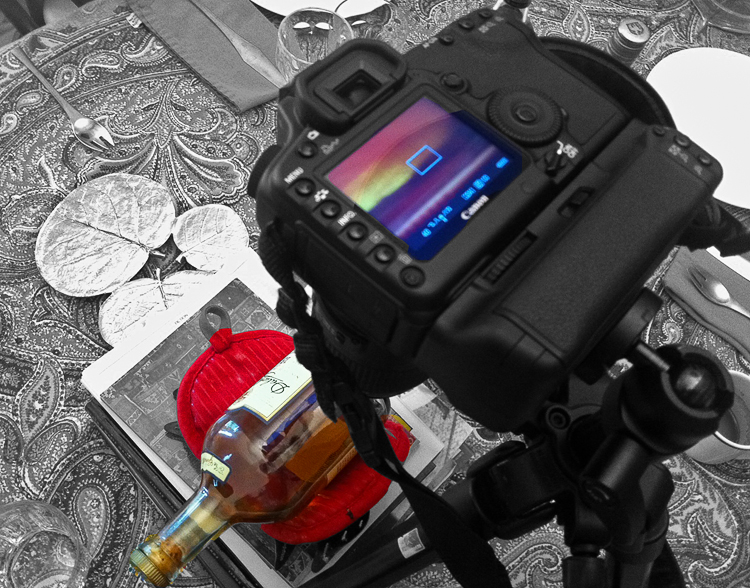
The result is also an experiential synergy between two ostensibly different (but fundamentally intertwined) realities: one literal, and external - i.e., reflections and/or refractions from common everyday "things" - the other implied, and internal - i.e., ineffable landscapes of the imagination. (I should add, and emphasize, that while all the images in this series look like they are severely "Photoshopped," this is emphatically not so; digital manipulations are all deliberately confined to global curves, local tonal adjustment, and occasional noise removal. What you "see" is what is / was "really there," although what your experience of "it" will be ... will be whatever your "eye" and/or "I" will make it ;-)
And so, for those of you interested in exploring my ongoing experiments with "synesthetic landscapes," I announce the publication of two portfolio editions: one small (consisting of about 40 images), the other large (consisting of 105 images, which includes all of those that appear in the "small" version). Both versions physically measure 7-by-7 inches (although a larger 12-by-12 inch version of the small portfolio edition is also available), come with soft- and hard-cover options, include an introductory essay on synesthesia and photography and an end-notes section that describes the process I used to capture these images (though this process continues to evolve, of course), and include a low-cost eBook edition (that is available as a direct download for Apple's iBooks).
Sunday, January 22, 2012
Dreaming with Open Eyes
Saturday, January 07, 2012
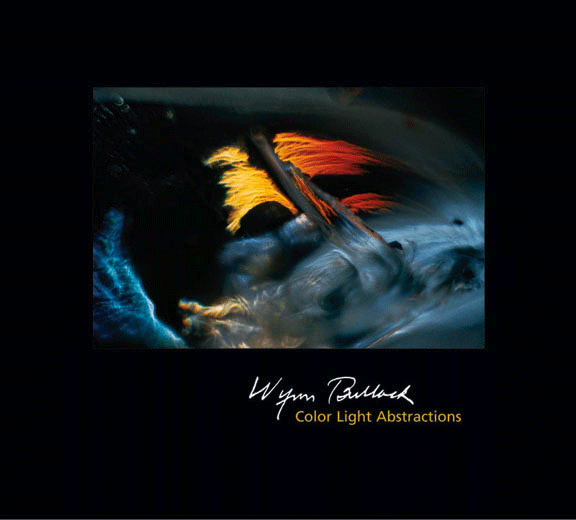
Wynn Bullock: Color Light Abstractions
Wynn Bullock is arguably one of the greatest fine-art photographers to have graced our world with his soulful mind, heart, and eye. He is also one of three photographers (of a bygone generation, relative to mine) that I deeply lament not having had the opportunity to meet and get to know personally (the other two being Ansel Adams and Minor White). Though I was certainly alive when Bullock passed away (and I was already "taking pictures"), I was but a young lad of 15, and had yet to appreciate the Buddhist transience of life and everything precious in it. Plenty of time to "get to know the greats..." (or so I thought)
The most important traits we share have to do with our photography: (1) we are both opportunistic, taking advantage of family trips and outings more than Ansel-Adams-like dedicated month-long trips away from home (reveling primarily in finding and revealing the transcendent nature of everyday reality), (2) we both incessantly experiment with new modes of visual expression (perpetually seeking that extra "spark" to ignite a new line of aesthetic inquiry), and (3) we both heavily ground our photography in intellectual - sometimes deeply metaphysical - musings (invoking images of time, space, reality, illusion, ...); a fact that should be obvious (on my side, at least) to anyone who has perused just the topics of my blog entries, much less their substance ;-) Bullock's musings may be sampled on his website (lovingly crafted and kept up-to-date by his eldest daughter, Barbara Bullock-Wilson) and in a few of his books that are still available: (1) Wynn Bullock: The Enchanted Landscape, Photographs 1940-1975, (2) Wynn Bullock: Photography a Way of Life, and (3) Wynn Bullock (Aperture Masters of Photography). (Links to other references are provided below).
Sunday, April 03, 2011
Luray Caverns Part III: a Harmony of Contrasts

Monday, January 17, 2011
How Many Unknown / Undiscovered Artists Walk Among Us?
Saturday, April 10, 2010
I took How Many Pictures on Vacation?
As is obvious from the post dates of my blog entries, there has (yet again!) been quite a dry-spell of late as far as my blog-posting goes. The culprit, as almost always, has nothing to do with lack of interest - if anything, my ever-patient muse and I are bubbling over with creative ideas - but lack of time, owing to "day job" pressures. So, on the heels of many more papers, study proposals, meetings and briefings that I can count (while staying nominally sane), my wife and I finally found a few days of solace in beautiful Siesta Key, Florida. In a strange (nested) synchronicity, as I was completing the book I took for our trip that dealt with the psychology and physics of synchronous events (Deciphering the Cosmic Number, by Arthur Miller), the DVD my in-laws were watching upon our return to Coral Gables (where they were kind enough to look after the kids while we were away) was Koyaanisqatsi. Koyaanisqatsi, which in the Hopi language means "crazy life, life in turmoil, life out of balance, life disintegrating, a state of life that calls for another way of living", is a remarkable film made in the early 1980s on that general theme, and scored by Philip Glass. It also perfectly describes the inner discord I currently feel: a profound lack of balance between the two worlds that define me; one of the intellect, which is filled with equations and computer code, the other of art and other aesthetic sensibilities, which has been getting the short-end of the proverbial stick these days. Seeing the hypnotic surreal-like images of the film as we stepped into my in-laws' house instantly crystallized for me the conflict that has been brewing inside of myself during the last few months, as more and more of my energy has been channeled into purely "intellectual" pursuits (sans art).While the imbalance unfortunately persists, its complementary part has at least been nourished in a small way by our brief 4-day sojourn to the Gulf waters. To say it was a joy to walk around with my camera strapped to my neck (something I have not done for well over two months, and one of the longest such stretches in recent memory), would be a deep understatement. Which brings me to the actual point of this blog entry, whose title recounts the words I silently uttered to myself when I looked at what I downloaded from my compact flash cards after getting back home to Virginia: "I took how many pictures on vacation?" (A clue to the answer lies in the number of images that make up the "quintic" shown above.)
The interesting part is that there are two correct answers to this question, and that each is both surprising and not. Most importantly, the answers together have given me an insight into my style of picture taking, which I now realize has undergone a bit of a transformation. Allow me to explain.
On the one hand, objectively speaking, I came home with quite a few images (in the relatively brief time I had to actually wander around, and as witnessed by the total number of files on my cards), about 1000. On the other hand, the actual number of distinct images - by which I mean a set of images such that all "loosely similar" photos are counted as a "single image" - is considerably, and suggestively, smaller. By this reckoning, I came away from our trip with exactly five distinct images!
Apart from a few unimportant and eminently forgettable "just grab the shot" shots, by far the majority of the remaining ~980 shots I took on this trip are so similar to one of the five illustrative images above that what I was effectively doing - albeit unconsciously - was simultaneously working on five mini-portfolios. Which also represents a mini-transformation in the way I "do photography" nowadays.My wife was the first to notice (a few short day-trips ago) that I spend far less time taking "indiscriminate" shots than before. That is, if strolling in a park, say, I am much less inclined to pause to take a picture of something (and even less inclined to bother setting up a tripod) than I was a few years ago. On the other hand, on those occasions where something does catch my eye, I am also much more likely to spend a considerably longer time setting up, composing, finding alternate angles, waiting for better light, and so on. Of course, nothing in the second set of activities is anything new per se (for this is the common "work space" that most photographers naturally live in). What is revealing to me is: (1) that I am doing so much less of the first kind of "snap and shoot" photography while in the company of others, including my wife (as normally, when out and about with my camera, I both desire to take pictures and not bludgeon others' patience), and (2) that my wife has noticed (even before I did) that when I pick now up my camera, it almost always presages a long local photo session, focused on a specific subject, and is rarely about "taking that one shot." Even a few carefully composed shots of the surf on a beach at Siesta Key simply will not do anymore; I need to spend a few hours taking over a 100!
What is perhaps even more revealing (to me, anyway, as I reflect on what else this says about my own ever-evolving creative process), is that I am not trying to find the proverbial "best shot" of a sequence that will serve as the "keeper" of the group. Rather I am deliberately (in hindsight;-) methodically stitching together a multilayered view of my experience of a single moment. Each image is recorded not because I think it will merely serve as an added "exemplar" of a set from which I'll eventually select a representative "best of" series. Rather, each image is taken in the belief that not only will it almost surely be a part of a "keeper" set (imperfections and all), but that - in and of itself - it represents an important element of a broader multi-image view of the interval of time during which my attention was focused on revealing something about my experience while taking this set of pictures. By way of analogy, my pictures are slowly taking on the character of words and sentences (intended to convey richer tones and meanings, and used as grammatical components of a larger, hopefully more nuanced, body of work, even if that body of work is only about a relatively short experience at one location), rather than paragraphs or completed "stories" (as before). Even more succinctly, I am finding myself taking far fewer images than ever before as intentionally isolated images, captured solely for whatever purpose a single image may serve to convey some meaning. Again, there is nothing strikingly new in this observation, as photographers do this sort of thing do all the time; at least if we examine the final body of work they produce to complete a given "project" (it is also the Lenswork "model" of focusing on themed portfolios rather than "greatest hits"). What is new - to me - is that this process has apparently now become so innate a part of my creative process, that it occurs, naturally, even within the rhythms of an otherwise routine photo-safari.
So, what better way to convey the "essence" of a wonderfully relaxing, much needed, break from work, than by a portfolio of quintics that reveal glimpses of the five - and only five ;-) photographs I took on my vacation?
Postscript #1: For those of you interested in exploring the fascinating life-long relationship between C.G. Jung and Wolfgang Pauli (one of the 20th Century's great physicists), additional references include: Pauli and Jung: A Meeting of Two Great Minds (by David Lindorff) and The Innermost Kernel (by Suzanne Gieser). Moreover, if you are in any way interested in Jung, you will surely want to find a place that has a hardcopy of a truly extraordinary (and extraordinarily expensive!) book, Jung's Red Book (I recently saw one at a local Barnes and Noble). An on-line perusal of sample pages simply cannot do justice to the magic contained therein. Jung had worked in secret on this book for decades, and it has only now been released (for the first time) after another two decades' worth of scholarship. You can read about its story in this New York Times book report. I would go so far as to say that even if Jung did nothing of value in psychology, and the Red Book were stripped of all its wondrous prose (and there is a lot of it, agruably including some of Jung's best) to include only the images Jung drew to illustrate the dreams he explores in it (so that we judge Jung's lifelong oeuvre by nothing other than the pictures in this one incredible book), Jung would go down as an artist of the highest caliber. Even if you have only a casual interest in psychology, dreams, and/or Jung, I would urge you to look at this magnificent book for its art alone!Postscript #2: In case there is any confusion, the five images (or image series) are, respectively (from left to right in the samples above): (1) beach/sand plants and vines, (2) close-ups of my mother-in-law's knick-knacks (as viewed on her dining-room table), (3) surf abstracts, (4) cracks in the painted lines (defining lane-boundaries on small roads in Siesta Key), and (5) close-ups of patterns on paper weights and easter eggs.
Saturday, July 11, 2009
Swirls, Whorls, and Tendrils
Although I am a physicist by day—or, perhaps, because I am a physicist (and thus want the left part of my brain to rest when I'm with my camera)—I have rarely come upon a subject that seamlessly combines my love of physics and passion for photography. Until now that is. Maybe it is my penchant for abstraction that led to this subject, and the connection to physics is more of an afterthought. Or maybe my physics “eye” unconsciously led me to take on this aesthetically surreal but very “real” physical subject, in hopes of stirring my conscious attention (and relentless equation scribbling). Whatever the case, my recent focus on “ink drop in water abstracts” has consumed both sides of my brain, and is—even as I write this blog entry—unlikely to release either side any time soon. A small—exploratory—gallery of images is here.Ink diffusion, in turns out, is anything but simple; either photographically or mathematically (for an example of the latter, see, for example, this paper on ink diffusion in Chinese ink paintings). On the photographic side, many photographers—amateur, pro, unknown, famous, living and long forgotten—have doubtless focused their lens’ on “ink & water” countless times, perhaps stretching all the way back to Fox Talbot. I have no illusions of having discovered a new “frontier” (as Bruce Barnbaum did with his magnificent shots of Slit Canyon). But even a familiar subject can sometimes offer unexpected surprises. My own humble addition to photography's collective oeuvre of subject matter is more akin to Hilla and Bernd Becher's typology of watertowers and other industrial structures. Only in my case, it is a typology of the dispersive structures of a single ink drop in water.
The technique is straightforward, but requires a bit of practice and patience. A small 3”-by-3” glass vase is filled with about ¾” of water (less than that, or more, yields a set of slightly “different” patterns from those appearing here) and placed on a light table (which provides the only source of light). A macro lens (in this case, a 100mm lens capable of 1:1 magnification) is mounted on a camera (Canon's 30D DSLR), and is positioned so that the lens is pointing vertically downward on the surface of the water. A small eyedropper is filled with India ink, is carefully centered between three and six inches above the water (as with water depth, a greater or lesser height yields a slightly different set of patterns), and a single drop—this is the "hard" part that requires a bit of patience—is slowly released.
As the ink strikes the water, about a third of its volume quickly spreads radially on the surface. The remaining blob sinks to the bottom. Some of it bounces back up, and a slow process of diffusion, dispersion, and rotation begins. The resulting 3D patterns are captured (and compressed into two dimensions via the lens) as they unfold, and are processed and displayed as digital negatives. A single drop’s effective "unfolding lifetime" varies between 1-1/2 and 2-1/2 minutes. It is not a real lifetime, of course, since the ink continues to diffuse until it is thoroughly mixed with the water, but denotes a period after which most of the "interesting" patterns—the swirls, whorls, and tendrils—have all but dissipated, and no new internal structures appear. The images in this portfolio show the structure of the radial spread of a single drop of ink in water as it appears at a single time (to within ~ 1/60th sec) near the tail end of its unfolding lifetime.
Each ephemeral form is unique, surreal, and exquisitely beautiful. Since these are lifesize macros, many of the fine details are literally invisible to the naked eye. The macro lens reveals what looks like "organic" life-forms, that develop as though some hidden “rule” (or genetic code) is guiding their evolution. In truth, the myriad shapes and forms are a complicated confluence of multiple simultaneous forces at work: diffusion, dispersion, interplay of relative viscosities of the water and ink, a transfer of momentum as the ink drop bounces upward after hitting the bottom of the vase, gravity, random drifts and impurities in the water, and thermal convection rolls due to the heat generated by the bulbs in the light table.
Tellingly, even as each delicate form is “perfect” onto itself, what starts the whole process going, and what is most responsible for the diversity of patterns, is imperfection. It is because the ink drops are not perfect spheres, because they assume a variety of randomly distorted oblong shapes as they fall, and because they have unpredictable and shifting densities of ink inside of them, that each sequence is a unique creation that unfolds just once, then vanishes forever.
That is to say, there is ‘no thing’ in the universe.
of what is relatively constant from a process of
movement and transformation.
They are like the shapes that
children like to see in clouds."
— DAVID BOHM, Physicist (1917-1992)
Wednesday, March 25, 2009
On the Art of Discovering Photos on a Drab Day

I saw it as not - as it is in reality - an exposed section of an old wall of a Civil-war-era stable, but rather a fortified section of a phantasmagoric prison cell (a metaphoric echo of my inner Russian angst?). I imagined all kinds of Borgesian tales behind the incarceration of "prisoners" held here throughout the decades (... centuries, millenia, ... just when was it built?). Alchemists imprisoned by Illuminati minions devoted to keeping a lid on secrets best not revealed? Uber-geniuses - long since forgotten in the mists of time - who stumbled upon eternal and shocking truths, and were unceremoniously dumped into locked cells to live out the rest of their lives in abandoned sarcophagi? Perhaps these ruins were even once called home by the "Old One", who quietly inserted himself into our realm to taste life of the flesh; yearning - like many of Kazantzakis' heroes - to just revel in the struggle between earth and spirit. What became of the "Old One" I wonder; and is he - still? - struggling, even after the walls of his prison have crashed down around him so long ago? Or was something even more mysterious once living within these walls - something for which to this day there are still no words, no languages, that adequately describe "it" except in the vaguest, most imprecise terms - something that the prison was never meant to contain at all, but was rather built to prevent everything on the outside of its walls from ever getting in? What happened when the walls came down? Have the strange symbols been deliberately etched onto the textured walls by the creature (or creatures) that escaped? Are they ciphers of clues to what awaits us all? Clues to how we might find a way out of an invisible prison that still surrounds us? That contains our cosmos? That is our cosmos?
Such were my (admittedly, slightly bizarre) musings as I watched the stable wall ruin out my window, wondering if the rain was ever going to stop and whether my car was well enough to get me back home when it did. Finally, there was a small break in the clouds, and the rain slowed to a drizzle. I got out my camera, steadied it on the trunk of my car, and took a single shot. I knew how the final image would look even before I pressed the shutter; it would hint - but only hint - of the surreal Borgesian world (just on the cusp between the real and unreal) my mind's eye was lucky enough to briefly glimpse on this otherwise drab "uninteresting" day in the park.Sunday, September 07, 2008
Abstract Glyphs: Mysterious Purveyors of Hidden Harmonies
What does Athens, Greece have to do with the Carpathian Mountains? That's a trick question, of course, as the "connection" between the two depends on first unraveling the meaning of the enigmatic title of this short blog entry... which has to do with a lucky find of (ostensibly "hidden") glyphs, and musing on them as mysterious purveyors of some unfathomably deep cosmic truth. (Of course, one is free to just revel in their just-as-ineffable quiet beauty without succumbing to my usual Borgesian overtones of over-intepretation ;-)I have previously written about a trip my wife and I took to Greece earlier this summer. Though my discussion focused almost exclusively on Santorini (the second leg of our journey), we also stayed in Athens and Crete. While I have yet to "develop" the raw files from the other two legs of our journey (and the obligatory shots of the Acropolis, the Palace at Knossos, and Samaria Gorge), I wish to share a few images from a growing portfolio I've tentatively entitled Abstract Glyphs: Mysterious Purveyors of Hidden Harmonies, and which came about by chance in Athens.
After spending the first three nights of our trip in Athens, my wife and I took a cab to the port of Piraeus to catch a ferry to Santorini. Since the ferry was delayed a few hours, I had some time to prowl around with my camera. Indeed, I had the run of virtually the whole open dock area; but could not stray too far - say, back into the city - for fear of missing our ferry.
So, what might catch a photographer's eye on a small city dock? And what does this all have to do with glyphs and the Carpathian mountains? My eye quickly homed in onto the two dozen or so oversized rubber dinghies hanging over the side of the dock to prevent the moored ferries from slamming their hulls against the concrete overhangs (which you can just about make out from the link to a Google satellite view given above). Or, more precisely, my eye quickly homed in on the splotches of colorful paint that adorned nearly all of the rubber dinghies on the dock. What immediately came to mind, as I approached the first dinghy for a closer inspection, is a marvelous - and surrealistically strange and funny - novel I had read last year by Polish novelist Witold Gombrowicz called Cosmos.
The novel begins as two young men meet - by chance - on the way to a Polish resort town in the Carpathian mountains. They are soon drawn to a particular rooming house as a direct (if unpredictable) consequence of seeing a sparrow hanged on a piece of wire hooked over a branch; an event that not only convinces the two that it has some deep hidden meaning, but is but a precursor of ever more bizarre and intricate "decodings of meaning" the two must make to understand their (increasingly confusing) lives. As the novel unfolds, our protagonists proceed to "discover" (though "conjure" may be more accurate) ever more recessed layers of "hidden meaning" from what (to all outside observers) are nothing but meaningless everyday things and events. They see arrows in ceiling stains that point in directions they must follow; and search through other people's rooms hoping to find important "clues," such a nail pounded partway into a wall just above the floor. Though disturbing on many levels (I'm leaving a lot out of this short description), the novel reminds us - and me, during the moment I took to walk over to inspect my first "paint splotched dingy" in Athens - that meaning exists in the world (or in a place, or encoded in a given object or symbol) only when there is someone to decode it.
There is no "meaning" in a signal without a receiver; and a receiver will interpret a signal as meaningless if it does not have the proper context in which to decode the signal's message. But what if there were no intended receiver, but there was a context in which a signal might nonetheless reveal a meaning? And what if there was no message sender (more precisely, no intentionally sent message), but a receiver was nonetheless present; and - purely by chance(!) - was in the proper context to receive a "message"? Is the whole world, perhaps, best described as a vast surreptitious web of timeless "meanings" in search of local senders and receivers?
Such were my thoughts, and such was the state of my mind - which also provided an inner meta-context - in which I took nearly a hundred photographs of "Hidden Glyphs of Unknown Meaning" at the port of Piraeus in Athens. Were these messages, I wondered; encoded by some mysterious (perhaps long deceased) author? Were they clues to the evolution of the universe? Hints for my own life's journey? Or just random irrelevant scrawls of disinterested natural forces (that confuse and confound unsuspecting errant passerbys with their siren-song of illusory order when meaning seems to magically arise in an otherwise random context)? What cosmic messages are locked in these hidden glyphs of unknown meaning? Is there perhaps an even deeper level of understanding - and by whom? - of the hyper-glyph that I unwittingly unleashed into the world by using my camera to muse on the indecipherable glyphs I found in Athens?